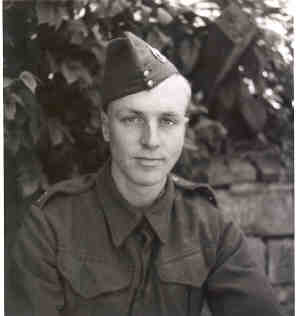
John Kenneth Sunderland "Jack" EARNSHAW
- Born: 18 Aug 1920, Plaistow, West Ham, Essex, England 3
- Died: 21 Sep 1944, Hofuku Maru, Subic Bay, Philippines, At Sea aged 24 36
- Buried: Column 42 (Commemorated), Singapore Memorial, Kranji, Singapore 36

General Notes:
Birth Registration Sep 1920 West Ham 4a p259 entry 314 reg on 24 Sep 1920 at 50 Tweedmouth Road, Plaistow - John Kenneth Sunderland Earnshaw, but always known as Jack
GRO index
EARNSHAW, JOHN KENNETH SUNDERLAND mother GIBSON
GRO Reference: 1920 S Quarter in WEST HAM Volume 04A Page 259
Death
War Deaths (Army-Other Ranks) 1939-1948
Earnshaw Jack K S Cpl 2582792 R. Sig 1944 Vol 16 Page 175
Certificate :
Return of The Royal Signals for those killed in action between 3 September 1939 and 30 June 1948 inclusive
2582792, Corpl, EARNSHAW Jack Kenneth Sunderland, 24, England, 21 9 1944, At Sea, Killed in Action
Probate Calendar 1946
Earnshaw John Kenneth Sunderland of 18 Cypress Avenue Whitton Twickenham Middlesex died on or since 21 September 1944 on war service Administration (with Will) London 8 August to Verdi Lindley Earnshaw printers manager. Effects £664 3s 9d.
- the transcription on Ancestry.co.uk has name as John William Sunderland Earnshaw and the date of death as 21 Sep 1945. The image clearly shows the correct information.
Jack enlisted, for 4 years, into the Territorial Army, the London Corps of Signals in the Royal Corps of Signals at Fulham House on 25 April 1939 with the name Jack Kenneth Sunderland Earnshaw (but his birth certificate states John). His height was 6ft, weight 160lbs and he had fair hair with blue eyes. His address was 18 Cypress Avenue, Whitton. His trade on entry was Compositor (printing typesetter).
His first posting was 17 December 1939 when he embarked as part of No 10 Line Section with the British Expeditionary Force to France. He was evacuated (presumably from Dunkirk) between 30 May and 4 Jun 1940. He was posted with 3 Comm Signals on 5 July 1940 and made Acting Lance Corporal on 4 February 1941.
- this appears to be when he joined 27 line section at Harnham, near Salisbury, under the command of Captain Barry Custance Bacon in Autumn 1940. Their C.O. was Lt Col Selby Milner. A line section was responsible for erecting new telegraph and telephone lines (on poles).
Jack Kenneth Sunderland Earnshaw was in the 27th Line Section, Royal Corps of Signals. He embarked for Singapore on 28 July 1941 (from Liverpool on the Orontes) and the journey took about 2 months. He was made Acting Corporal 8 Jan 1942. Initially they worked in Singapore and then in Kota Tinggi in Malaya and later in various other locations in Malaya before being pulled back to Singapore in January 1942 and worked with an Australian unit before helping the Post Office keep existing phone lines repaired after bomb damage.
The RCS museum casualty card states
He was first posted missing on 15 February 1942 in Malaya (reported by Mrsi BM/699 reference W.O.L. D 28.2.42).
POW card 26 July 1943 - Prisoner - No camp.
reference to No: 2 Camp Thailand - dated Jul 1945
next of kin letter 6 Sep 1945 stating missing at sea Autumn 1944 (I have a copy of this letter)
next of kin letter 30 Nov 1945 presumed killed in action,at sea, whilst a P.W. 21 Sep 1944
- The reference to No 2 camp was to be as per the description on The National Archives item WO367 which suggests that there were four camps and that No 2 was Serangoon Road Camp. However, it is more than likely that he was in "2 group" and that the group was moved frequently from place to place, rather than being in a fixed camp.
National Archives document WO 235/995 contains the transcript of the trial of Sgt Mjr Jotani Kitaichi of the Japanese Army. He was charged with the mistreatment of POWs on board the Hofuku Maru, found guilty and hanged at Changi on 28 May 1947.
Evidence during the trial stated that everybody on board the ship had come from "Chungkai Camp, Siam and Jotani was in charge of them. During the defence Jokani stated he was at "No 2 detached camp, Thailand" and embarked the prisoners on the Hofuku Maru at Singapore and the ship left Singapore on 4th July 1944.
The letter of 6 September 1945 states that he is among the missing from a Japanese transport, conveying prisoners from Thai to Japan. It was thought that the sinking was in Autumn 1944. The information had been supplied in an official report from the Japanese Government.
Jack was killed at sea by American aircraft after being captured in Singapore. He was being transported by a Japanese ship that was bombed by an American aircraft. From a very brief search it appears that he was on the ship Hofuku Maru that was struck by aircraft from TF38 - only about 200 of the 1289 prisoners survived the initial attack, many dying later in camps or on other ships.
The only information available from the International Committee of the Red Cross (Geneva) was basically the same as the letter of 6 Sep 1945. This was supplied to me on 2 February 2005
EARNSHAW John Kenneth Sunderland, Rank Cpl, Service number 2582792. Place of internment : Missing from ship transporting POWs from Thai to Japan (according to information dated 12.7.1945). Source : one telegram from the Japanese authorities
I have all of his war record papers from the army, but they provided no information as to what happened to him between his capture and being posted missing at sea. Now I've had contact from the daughter of his Captain (Barry Custance Baker) who has copies of many letters from relatives of the POWs to Barry's wife (the originals are in the RCS Museum at Blandford) and also her father's memoirs. She has sent me copies of the six letters from my Grandfather and the three from Jack's fiancée. Before the fall of Singapore Mrs Baker had passed on letters to the families from her husband's men as they couldn't afford to send separate airmail letters, so one envelope from Singapore and Malaya contained several single sheet letters. Hence she had the contact addresses of many of the relatives and was able to keep in touch after they were captured.
Jack was engaged before the war - I thought her name was Mary. But I had no information as to her full name or what became of her, other than she broke off all contact with our family, presumably to try to build a new life. I now know, from letters she sent to Phyllis Baker who was the wife of Jack's Capt., that she was Mary Chitham (full name Chrissie Mary Chitham) from Leicester. Mary eventually married (1949) after the war and had two children. She died in 2006.
As is now known (July 2012), Jack was captured at the fall of Singapore and initially kept in the Changi army camp before being moved as part of a working party to Bukit Timah on Singapore island in September 1942 - building a memorial to soldiers from both sides who died during the invasion. Later in 1942 they were moved to Banpong, Siam (Thailand) by train as part of "2 Group" in order to build the Burma/Thailand railway along the east bank of the Nam Kwai Noi (The River Kwai). As the work progressed they were moved on to new locations to build further sections of the line. These included Kanchenaburi(the site of the famous bridge), Chungkai, Wan Lung and Wan Po. After completing the viaduct at Wan Po (about April 1943) some men were selected to be moved elsewhere. These included 8 men from 27 Line Section, one of which was Jack.
He was then brought back to Singapore at the end of 1943 in order to be sent to Japan. The prisoners were put on the Hofuku Maru (reports vary as to whether this was in February or July 1944) where they remained until their deaths at sea. The ship sailed from Singapore to Manila in July and finally left Manila on 20 September reaching Subic Bay, en route to Japan, the next day when the convoy was spotted and sunk.
Information was very hard to come by as very little came out of the Far East other than a few "multiple choice" post cards. Nut after interviewing Sgt Smith, Mrs Baker has recorded
Earnshaw. 1944 June. Health quite good. Mentioned fiancée a lot. Packed up on railway in 1943 August, No party for Japan.
Sgt Smith was from Royal Corps of Signals and was a survivor of the ship sinkings
He was awarded, posthumously, the 1939/45 War Medal, 1939/45 Star and the Pacific Star in October 1947.
It appeared (Dec 2004) that there was very little additional information that could be gleaned from official sources. However, there are two further documents at The National Archives that have detail of POWs
WO367 - a register of about 15,000 POWs in Singapore. I have searched the two "other ranks" registers and his name does not appear to be in this register.
WO345 - a set of some 56,000 record cards of POWs. I have a copy of the card for John Kenneth Sunderland Earnshaw and this confirms everything above - that he was captured on 15 Feb 1942 and that he died on 21 Sep 1944 on the Hofuku Maru. There is also a reference to a work party identified as "II" (ie 2).
Link to the reference below for a copy and full translation of the card
Army Roll of Honour, 1939-1945 (National Archies WO304) as on Ancestry.co.uk
Name: Jack Earnshaw
Rank: Corporal
Death Date: 21 Sep 1944
Number: 2582792
Birth Place: London E
Residence: Middlesex
Regiment at Enlistment: Royal Corps of Signals
Branch at Enlistment: Royal Corps of Signals
Theatre of War: Malaya
Regiment at Death: Royal Corps of Signals
Branch at Death: Royal Corps of Signals
Army Roll of Honour 1939-1945 (from findmypast.com)
Name: EARNSHAW, Jack
Branch at death: Royal Corps Of Signals
Regiment, Corps etc.: Royal Corps of Signals
Branch at 01/09/39: Royal Corps Of Signals
Regiment, Corps etc.: Royal Corps of Signals
Surname: Earnshaw
Forename(s): Jack
Initials: J K S
Birthplace: London E
Residence: Middlesex
Rank: Corporal
Number: 2582792
Date died: 21 September 1944
Theatre of war: Malaya
Entry from Commonwealth War Graves Commision
Casualty Details
Name:EARNSHAW, JACK KENNETH SUNDERLAND
Initials:J K S
Nationality:United Kingdom
Rank:Corporal
Regiment:Royal Corps of Signals
Unit Text:27 Line Sec.
Age:24
Date of Death:21/09/1944
Service No:2582792
Additional information:Son of Verdi Lindley Earnshaw and Florence Lavinia Earnshaw.
Casualty Type:Commonwealth War Dead
Grave/Memorial Reference:Column 42.
Cemetery:SINGAPORE MEMORIAL
Cemetery Details
Cemetery:SINGAPORE MEMORIAL
Country:Singapore
Locality:unspecified
Visiting Information:Kranji War Cemetery, in which the Memorial is located, is constructed on a hill with the means of access being via three flights of steps rising over four metres from the road level, which makes wheelchair access to this site impossible.
Location Information:The Memorial stands in Kranji War Cemetery. Kranji War Cemetery is 22 kilometres north of the city of Singapore, on the north side of Singapore Island overlooking the Straits of Johore. It is just off the Singapore-Johore road (Woodlands road) at milestone 13 1/2 and there is a short approach road from the main road. The Cemetery is known locally as Kranji Memorial, and one must be sure of the address before boarding a taxi as many taxi drivers do not know the Cemetery. There are also bus stops on the main road facing the Cemetery and an MRT terminal is under construction a short distance from the Cemetery.
Historical Information:Before 1939 the Kranji area was a military camp and at the time of the Japanese invasion of Malaya, it was the site of a large ammunition magazine. On 8 February 1942, the Japanese crossed the Johore Straits in strength, landing at the mouth of the Kranji River within two miles of the place where the war cemetery now stands. On the evening of 9 February, they launched an attack between the river and the causeway. During the next few days fierce fighting ensued, in many cases hand to hand, until their greatly superior numbers and air strength necessitated a withdrawal. After the fall of the island, the Japanese established a prisoner of war camp at Kranji and eventually a hospital was organised nearby at Woodlands. After the reoccupation of Singapore, the small cemetery started by the prisoners at Kranji was developed into a permanent war cemetery by the Army Graves Service when it became evident that a larger cemetery at Changi could not remain undisturbed. Changi had been the site of the main prisoner of war camp in Singapore and a large hospital had been set up there by the Australian Infantry Force. In 1946, the graves were moved from Changi to Kranji, as were those from the Buona Vista prisoner of war camp. Many other graves from all parts of the island were transferred to Kranji together with all Second World War graves from Saigon Military Cemetery in French Indo-China (now Vietnam), another site where permanent maintenance could not be assured. The Commission later brought in graves of both World Wars from Bidadari Christian Cemetery, Singapore, where again permanent maintenance was not possible. There are now 4,458 Commonwealth casualties of the Second World War buried or commemorated at KRANJI WAR CEMETERY. More than 850 of the burials are unidentified. The Chinese Memorial in Plot 44 marks a collective grave for 69 Chinese servicemen, all members of the Commonwealth forces, who were killed by the Japanese during the occupation in February 1942. First World War burials and commemorations number 64, including special memorials to three casualties known to have been buried in civil cemeteries in Saigon and Singapore, but whose graves could not be located. Within Kranji War Cemetery stands the SINGAPORE MEMORIAL, bearing the names of over 24,000 casualties of the Commonwealth land and air forces who have no known grave. Many of these have no known date of death and are accorded within our records the date or period from when they were known to be missing or captured. The land forces commemorated by the memorial died during the campaigns in Malaya and Indonesia or in subsequent captivity, many of them during the construction of the Burma-Thailand railway, or at sea while being transported into imprisonment elsewhere. The memorial also commemorates airmen who died during operations over the whole of southern and eastern Asia and the surrounding seas and oceans. The SINGAPORE (UNMAINTAINABLE GRAVES) MEMORIAL, which stands at the western end of the Singapore Memorial, commemorates more than 250 casualties who died in campaigns in Singapore and Malaya, whose known graves in civil cemeteries could not be assured maintenance and on religious grounds could not be moved to a war cemetery. The SINGAPORE CREMATION MEMORIAL, which stands immediately behind the Singapore Memorial, commemorates almost 800 casualties, mostly of the Indian forces, whose remains were cremated in accordance with their religious beliefs. The SINGAPORE CIVIL HOSPITAL GRAVE MEMORIAL stands at the eastern end of the Singapore Memorial. During the last hours of the Battle of Singapore, wounded civilians and servicemen taken prisoner by the Japanese were brought to the hospital in their hundreds. The number of fatalities was such that burial in the normal manner was impossible. Before the war, an emergency water tank had been dug in the grounds of the hospital and this was used as a grave for more than 400 civilians and Commonwealth servicemen. After the war, it was decided that as individual identification of the dead would be impossible, the grave should be left undisturbed. The grave was suitably enclosed, consecrated by the Bishop of Singapore, and a cross in memory of all of those buried there was erected over it by the military authorities. The 107 Commonwealth casualties buried in the grave are commemorated on the Singapore Civil Hospital Grave Memorial. Kranji War Cemetery and the Singapore Memorial were designed by Colin St Clair Oakes. Adjoining Kranji War Cemetery is KRANJI MILITARY CEMETERY, a substantial non-world war site of 1,378 burials, created in 1975 when it was found necessary to remove the graves of servicemen and their families from Pasir Panjang and Ulu Pandan cemeteries.
No. of Identified Casualties:24313
From http://user.itl.net/~glen/BritishinSingapore%26Malaya.html
Changi Gaol was the original location of all civilian internees, male and female. Later, when the infamous Death Railway in Thailand was completed, the military POWs were brought back to Singapore and, in May 1944, the civilians were moved to Sime Road Camp.
The internees themselves kept a register of all those in Changi Gaol. In alphabetical order, it records each individual's name, age, marital status, occupation, the addresses of spouses and next of kin, date of arrival and, in the remarks column where relevant, cause and date of death. The original is now in the Imperial War Museum <http://www.iwm.org.uk/>, Lambeth Road, London SE1 6HZ, who were kind enough to furnish me with my father's entry as follows.
For further details see JKS EARNSHAW
Noted events in his life were:
• Military Service: Enlisted into the Territorial Army, 25 Apr 1939, London, England.
• Military Service: Posted, 17 Dec 1939, France.
• Military Service: Evacuated, 30 May 1940, Dunkirk, France.
• Military Service: Posted, 5 Jul 1940, Singapore.
• Military Service: Captured as POW, 15 Feb 1941, Singapore.
|